top of page


All Posts


Split Rail Fence Gates: Sizes, Options and Installation
The right gate finishes a split rail fence and makes it useful, since it decides how you, your mower, your vehicle or your animals get through. West Virginia Split Rail™ gates are built to match the fence, come treated or untreated, and are available in custom sizes. Here is how to choose and install one. Start with the opening Measure the width you need, then decide who or what uses the gate: Use Typical need Walkway or garden A narrow walk gate for people and wheelbarrows L

Zoee Arrington
Oct 192 min read


Split Rail Fence with Wire Mesh for Pets and Livestock
A split rail fence on its own marks a boundary, but adding wire mesh turns it into a working enclosure for dogs, children and small animals. Mesh is one of the cheapest upgrades available and is often a do-it-yourself job. Here is how to choose it, attach it, and know when more is needed. Why add mesh? The gaps between rails are wide enough for a small dog, a toddler or a rabbit to slip through. Mesh fills those gaps while keeping the rustic look of the wood. WVSR serves resi
Zoee Arrington
Sep 22 min read


15 Split Rail Fence Ideas for Curb Appeal
Split rail fencing brings natural warmth and a timeless look to almost any landscape, from suburban front yards to coastal properties and open acreage. Its open design frames a space without blocking the view. Use these 15 ideas to see how it can work on your property. Frame the front of your property Line the driveway. A 2-rail fence along both sides gives a clear, welcoming entrance. Outline the front yard. Mark the edge of your lawn along the road without walling it off. A
Zoee Arrington
Aug 72 min read


2-Rail vs. 3-Rail Split Rail Fence: How to Choose
Choose a 2-rail split rail fence if you want an affordable boundary marker with a low, open look, and a 3-rail fence if you want a taller, sturdier line that does more to keep people, pets or animals where you want them. West Virginia Split Rail™ offers 1-rail, 2-rail and 3-rail options, so the right pick comes down to purpose, budget and style. Quick comparison 1-rail 2-rail 3-rail Best for Golf paths, walkways, garden edges Property lines, driveways, landscaping Yards, pets
Zoee Arrington
Jul 152 min read


How Long Does a Pressure-Treated Split Rail Fence Last?
A pressure-treated split rail fence can serve a property for many years because the preservative is forced deep into the wood, not just brushed on the surface. Exactly how long it lasts depends on the treatment level, your soil and drainage, and how well you maintain it. Here is what that treatment does and how to make the most of it. What pressure treating does In pressure treating, wood is placed in a sealed chamber and preservative is forced into the fibers. This changes h
Zoee Arrington
Jun 142 min read
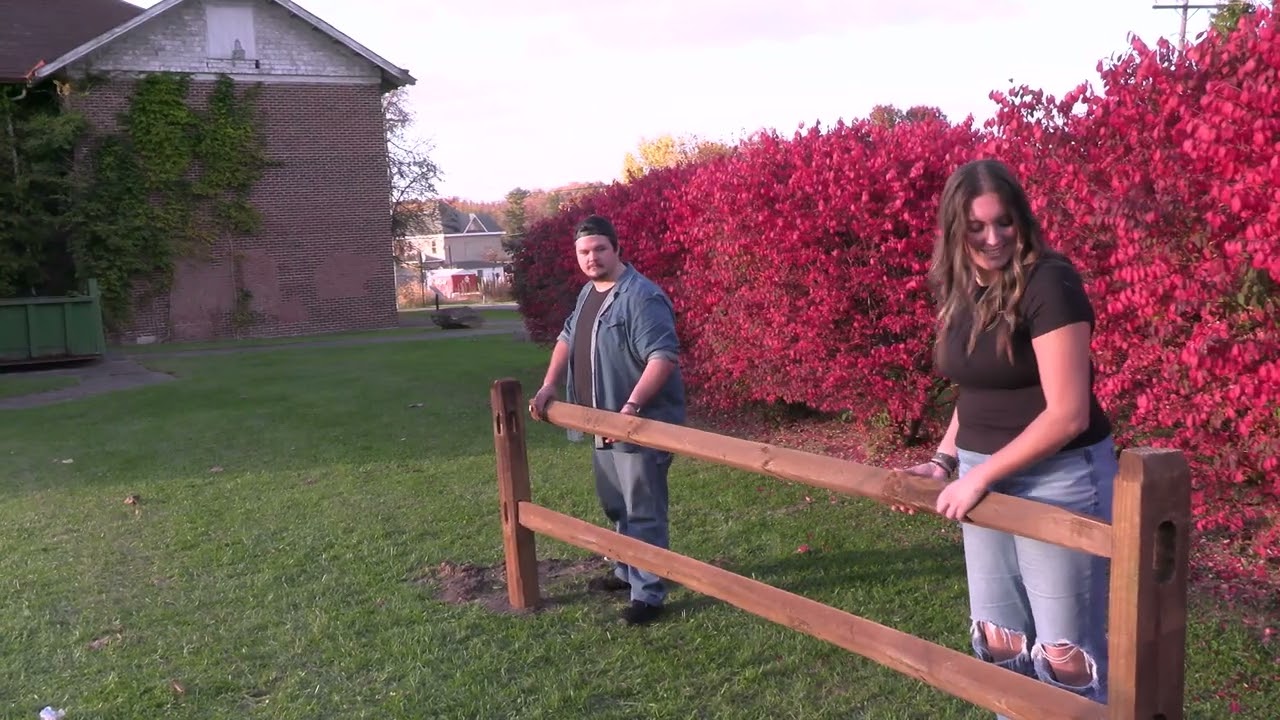
How to Install a Split Rail Fence (DIY Guide)
You can install a split rail fence in a weekend with basic tools: a post hole digger, string and a level. This guide walks through the process from planning to the last rail. Always follow the install sheet that comes with your fence, since post depth and spacing depend on the style you buy. What you need Post hole digger or power auger String line or mason's line, stakes and a tape measure Level (a 4-foot level works best) Shovel and a tamping bar Gravel or crushed stone for
Zoee Arrington
May 283 min read


Split Rail Fence Cost... DIY vs. Installed Prices
A split rail fence is one of the most affordable ways to mark a property line, and building it yourself can cut the bill sharply. Published cost guides put wood split rail materials at roughly $4 to $10 per linear foot for pine, with professional installation pushing the total much higher. Here is what drives the number and where you can save. What a split rail fence typically costs Estimates vary by region and by guide, so treat these as ballparks: Materials only (pine, 2 to
Zoee Arrington
Apr 93 min read


Integrating Split Rail Fencing into Site Design: A Landscape Architect’s Approach to Scale and Cohesion
Fencing as a Structural Layer Within Site Planning In site design, fencing operates as a structural layer that organizes space without dominating it. For landscape architects, the challenge is to introduce boundaries that support circulation, define programmatic zones, and reinforce the overall layout while maintaining a sense of continuity. When executed effectively, fencing becomes a subtle but essential component of the site’s framework. Designing for Scale and Consistency
Zoee Arrington
Mar 182 min read


Fencing in Landscape Architecture: Defining Space Without Limiting Design
The Role of Fencing in Site Design Fencing, within the context of landscape architecture, is far more than a boundary. It is a structural element that influences how a space is organized, how movement is guided, and how the built environment interacts with its surroundings. For landscape architects and developers, fencing must operate as both a functional and design-driven component, contributing to the overall coherence of a project rather than acting as an afterthought. Est
Zoee Arrington
Mar 82 min read


Commercial Fencing Solutions for Large-Scale Development Projects
Rethinking Fencing in Commercial Environments In commercial development, fencing has traditionally been viewed as a purely functional requirement. However, as projects evolve toward more experience-driven environments, fencing must now contribute to both the usability and visual identity of a space. Developers and landscape architects are increasingly seeking fencing solutions that provide structure while aligning with the overall design intent of the project. Balancing Durab
Zoee Arrington
Feb 262 min read


Modern Ranch Wood Fencing Solutions for Equestrian Properties and Horse Farms
Elevating Residential Design Through Boundary Systems In residential development, the success of a project is often defined by how well each element contributes to the overall experience of the community. Fencing, while sometimes treated as a secondary feature, plays a meaningful role in shaping how neighborhoods feel, function, and age over time. Residential wood fencing solutions have become increasingly relevant in this context, offering a balance between structure and ope
Zoee Arrington
Feb 162 min read


Split Rail Fencing for Horses: A Practical and Design-Conscious Approach
Balancing Safety and Design in Equestrian Environments Designing spaces for horses requires a careful balance between safety, durability, and environmental integration. Whether applied to private farms, equestrian facilities, or large rural developments, fencing must perform reliably while supporting the overall character of the land. Split rail fencing continues to be a widely used solution in these settings because it addresses functional needs without introducing unnecessa
Zoee Arrington
Jan 192 min read


Why Split Rail Fencing is the Perfect Rustic Charm for Your Property
There's something timelessly captivating about a split rail fence winding through a verdant landscape. It evokes visions of pastoral elegance, sprawling meadows, and sun-drenched afternoons where simplicity reigns supreme. If you’ve ever longed to capture that quintessential countryside charm, split rail fencing might just be the missing piece in your property’s puzzle. Not only does it serve as an exquisite boundary, but it also weaves a story of heritage and tradition with
Zoee Arrington
Jan 165 min read


Fencing Specification in Landscape Architecture: A Material and Design Perspective
Fencing as a Specification, Not a Detail Within landscape architecture, fencing is often treated as a secondary detail, yet its impact on site performance and visual cohesion is significant. When approached as a specification rather than an afterthought, fencing becomes an integral part of how a project functions and is experienced. It influences movement, defines thresholds, and contributes to the overall material language of a site, making its selection a critical decision
Zoee Arrington
Dec 30, 20252 min read


Integrating Commercial Wood Fencing Solutions into Landscape Architecture Projects
Fencing as a Design Element in Landscape Architecture Within landscape architecture, fencing is not simply a boundary but an integral component of the overall design strategy. It influences how spaces are defined, how users move through a site, and how the built environment interacts with natural elements. Commercial wood fencing solutions provide a way to address these considerations without introducing unnecessary visual weight. Enhancing Spatial Organization In large-scale
Zoee Arrington
Dec 14, 20252 min read


Why Commercial Wood Fencing Solutions Are Replacing Traditional Materials
Rethinking Conventional Fencing Materials For decades, commercial fencing has relied heavily on chain link, steel, and synthetic materials due to their perceived durability and accessibility. While effective in basic applications, these materials often fail to meet the evolving expectations of modern development, where design and user experience are increasingly prioritized. Commercial wood fencing solutions are now being reconsidered as a more balanced alternative. A Shift T
Zoee Arrington
Nov 26, 20252 min read


Commercial Wood Fencing Solutions for Developers
The Evolving Role of Fencing in Commercial Development Commercial fencing is no longer treated as a purely functional requirement. As development trends shift toward experience-driven environments, every element of a site must contribute to its overall identity, including boundary systems. Commercial wood fencing solutions have become increasingly relevant in this context, offering a balance between structure and design that aligns with modern expectations. Defining Space Wit
Zoee Arrington
Nov 7, 20252 min read


Rethinking Commercial Fencing: A Design-Driven Alternative for Modern Developments
Moving Beyond Traditional Commercial Fencing Commercial fencing has traditionally prioritized durability and cost over design, resulting in widespread use of chain link and metal systems. While functional, these materials often create a harsh visual boundary that conflicts with modern development goals. As commercial spaces shift toward more experience-driven environments, these conventional solutions are being reconsidered. A More Integrated Approach to Site Design Split rai
Zoee Arrington
Oct 13, 20252 min read


Natural Wood Fencing in Landscape Architecture | Split Rail Guide
The Shift Toward Natural Materiality in Design The movement toward natural materials in landscape architecture reflects a broader priority of creating environments that feel contextual and environmentally responsive. As projects increasingly emphasize integration with their surroundings, materials must support this goal without compromising durability or scalability. Split rail fencing aligns naturally with this shift, offering a solution that is both functional and visually
Zoee Arrington
Sep 29, 20252 min read
Split Rail Fencing for Large-Scale Land Planning
The Role of Fencing in Large-Scale Site Design In large-scale land planning, every design decision must operate at multiple levels simultaneously, balancing function, long-term usability, visual cohesion, and cost efficiency. Fencing, while often treated as a secondary element, plays a significant role in shaping how a space is experienced and navigated. For landscape architects and developers working across expansive properties, split rail fencing has emerged as a solution t
Zoee Arrington
Sep 10, 20252 min read
bottom of page